Hey guys and gals, I'm pretty much moved in to college and classes have started for me. Here are some pros and cons about my first week at Messiah
Pros:
- Great biology professors, especially my biology advisor whom I find to be an ultra cool guy.
- Cool roommates
- Awesome residence hall (GO WITMER)
- Fun orientation week, Messiah does a great job!
- Tons of new friends. especially the international kids
- Lots of fun activities
- Good food (for now)
Cons
- Too many pretty girls
- Roommates are very messy LOL
- Kinda eccentric chemistry teacher
- Lots of reading + writing
- Little sleep
- Too many distractions
Thursday, September 2, 2010

Saturday, July 31, 2010
Selfishness to Surrender
This past few days, I've been noticing that I've become a little too selfish. I want things done the way I want them to be done, and have been moaning and showing some attitude when my parents tell me otherwise. I sometimes think that this may be due to my feeling of future "independence" when I move to college in less than a month, but I think it may have grown deeper than that. Maybe I have refused to let others tell me what to do, and have become so hot headed that I might miss out on valuable advice that other people (my parents) offer. Maybe I've been too constrictive of my life to let God take full control over it. I want things done my way, and that is a pretty bad sign of the selfishness that will inhibit me from having Jesus as pilot of my life. It has never been too late to change my ways, and when I reflect on these things, I'm drawn to the song "Take All of Me" by Hillsong United. The main chorus strikes me as it says "I love you, all of my hope is in you....Jesus Christ, take my heart, take all of me" To be full surrendered to God requires full obedience, an aspect of my life that requires working with the help of the Holy Spirit. Disobedience, as the Bible says, is as good as idolatry, and I think that I have become the idol. I've been too busy thinking of what I want and what I have to do rather than to obey my Creator and let him fulfill my needs and desires according to His time. I believe when I fully surrender to His will....only then I can truly get rid of my stubbornness and pride.
Sunday, July 25, 2010
Inception: A Review
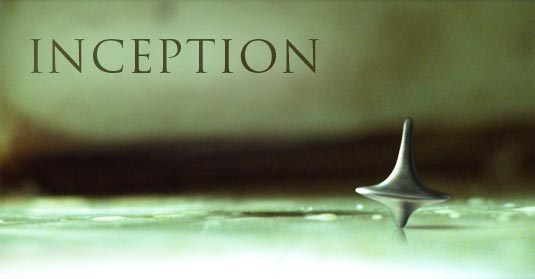
Welcome to the world of dream manipulation, an alternate reality where dreams hide valuable information that a person stores away from intruders and where ideas can be placed in the minds of the unknowing. Meet Dom Cobb, a professional "extractor" or individual who steals information from others' dreams. He leads a team of extractors, each having their own specialty. There is the architect, or the person who creates the dream; there is a forger, an individual who can forge the identity of a person whom the subject, the host of the dream extraction/inception, knows in real life; and there are point men, or guys who monitor the state of the dream. These group of highly skilled thieves either extract information from a dream through the process called extraction, or plant information in a dream through inception. The latter is the harder of the two as it requires multiple levels of dreams to accomplish. Sound complicated enough? Good.
This is not a movie for the weak-minded. It requires you to think on a grander scale, on a level where the distortion between a dream and reality is not so clear-cut. You may think you're in a dream, only to find out you're in a dream within a dream. Inception makes the movie goer question "What is real and what is not?" The concept of dream manipulation is to trick the host into thinking that he is in reality while bluffing him in a effort to extract or implant information. I think director Chris Nolan does an excellent job at presenting this predicament while not losing sight of enough action to keep the viewer entertained. He builds the story rigidly and leaves some holes for he viewer to fill, often during sections where you cannot tell fact from fiction. Inception is definitely a thinker's movie, and it strives to be, but with added action and suspense to keep the movie-goer in his/her seat. Inception will definitely make the viewer ask this question, "Is my dream a figment of my reality...or is it more than that?"
Finding God in BioShock

Just yesterday, I finished playing BioShock (late I know), a first person shooter game that reveals more about a society without God than most people would think. At first sight, this might be a game filled with violence, gore, and questionable ethics, but when one digs deeper, one will notice that this game is a story of a city that has abandoned God, a human empire that rejected religion and favored science, a social experiment that now lies in ruins. First of all, this game was inspired by the works of Ayn Rand, an author whom I admire for her books concerning capitalism and the “selfishness” of man. However, Rand was an atheist, therefore she left little place for God and religion in her works. The city of Rapture, where the game takes place, is created as a utopia for intellectuals. The founder, Andrew Ryan, built it on the principles of Rand’s idea of a perfect society found in her book, Atlas Shrugged. This utopia embraces the idealistic opinion that man who works to create for himself and no one else, thus making him “selfish”. It embraces the main idea of capitalism, where the desire to succeed is one’s own and can only be carried out if one is selfish enough to accomplish it. However, as the player reaches Rapture, we find that it is a dystopia rather than a utopia. Rapture’s citizens have genetically manipulated (or spliced) themselves with superhuman abilities, but at the cost of their sanity. How does relate to God, one might ask? Well, where is the utopia? A city built by man will crumble to the ground, so what more Rapture? A utopia that rejects God is one that has marked its own death trap; it has directly challenged God. Digging deeper into the game, we find that the morals of Rapture’s denizens are nonexistent as they perform experiments on humans that we would find questionable at the very least today, if not outrageous. Smugglers roam the alleys, selling contraband items such as Bibles, but not with the mission to spread the Gospel, but rather to make a profit. A city such as Rapture is in a state of absolute moral decay that there is no rapture for its citizens (nice pun eh?). Therefore, we can see from BioShock that God really plays a bigger role in the story than most people think. Isaiah 26:5 states this “He [God] humbles those who dwell on high, he lays the lofty city low; he levels it to the ground and casts it down to the dust.” Rapture has boasted that it does not need God, but when it did so, it posed a direct challenge to the Almighty. Just like the Titanic, the man who built Rapture feels the brunt of challenging God; his city will never prevail.
Friday, July 23, 2010
Lead me to the cross

Well, tonight as I were worshiping during young adult service, the young adults pastor challenged us to give all we had and he asked us "Is worship about you...or is it about the One whom you are worshiping?" He then led us with this rendition of Hillsong's "Lead Me to the Cross"
Here are the lyrics:
Savior I come
Quiet my soul remember
Redemptions hill
Where Your blood was spilled
For my ransom
Everything I once held dear
I count it all as lost
Lead me to the cross
Where Your love poured out
Bring me to my knees
Lord I lay me down
Rid me of myself
I belong to You
Lead me, lead me to the cross
You were as I
Tempted and trialed
You are
The word became flesh
Bore my sin and death
Now you're risen
To your heart
To your heart
Lead me to your heart
Lead me to your heart
Quiet my soul remember
Redemptions hill
Where Your blood was spilled
For my ransom
Everything I once held dear
I count it all as lost
Lead me to the cross
Where Your love poured out
Bring me to my knees
Lord I lay me down
Rid me of myself
I belong to You
Lead me, lead me to the cross
You were as I
Tempted and trialed
You are
The word became flesh
Bore my sin and death
Now you're risen
To your heart
To your heart
Lead me to your heart
Lead me to your heart

These words challenge my motives and thinking when I start worshiping. Do I worship so that my God will bless me? Do I worship so that people may think I'm religious...OR do I worship because I want a deeper connection with my Savior, the one who became human, went though the same trials as I, and died for my sins so that I could live with Him for eternity? As I began to question my thoughts, emotions of joy and thankfulness just flowed...as I was led back to cross..the place where I had first found and embraced my salvation and redemption.
Saturday, July 17, 2010
Aren't we lucky?
As Americans, we like to complain a lot. I don't say this as an insult, but rather as a statement that I am sometimes guilty of. New York Times recently published an article, and you can read it here, North Korea is in dire need of medicine and aid according to the humanitarian association Amnesty International. This piece of news comes as a surprise as the World Health Organization (WHO) has claimed North Korea to be the envy when it comes to health care standards. But besides that point, we as Americans should be ashamed of ourselves for being critical of our health care system. I am not a fan of the recent health care bill and I am for the privatization of our medical system, but I am appalled that Americans would consider their health care system to be broken enough for repair. It disgusts me how unappreciative America is of her blessings. To have a world class health care system, probably the best in the world if nothing else, and still people complain endlessly of the high costs of medicine and health care, Even North Korea, a nation supposed to be rivaling the United States in terms of modernization, has inadequate medical standards. Americans need to reevaluate their perspective of the blessings that have been endowed upon them. If Americans fail to do so, they will only transform their prosperity into ruin.
Good Ol' George
 In the aftermath of George Steinbrenner's recent passing, critics have questioned whether his miracle transformation of the New York Yankees from a team worth 10 million to a team worth 1.6 billion at the time of his death. Some have called him lucky because he originally planned to buy the Cleveland Indians, but a unproductive meeting with the drunk owner of the Indians led Steinbrenner to buy the Yankees instead and create history with the team. My verdict? Everyone gets a chance at fortune and success once in their lives, and I am sure Steinbrenner took every opportunity.You can read more here
Thursday, July 15, 2010
Bye Bye Ms. American Pie

Pie's second verse reflects the state of American culture during the 1950s, a period where rock was blooming, but overshadowed by slower forms of music. It also shows that relationships were much more intimate in dancing during that period of time as there are references to state that teenage love was associated with dancing.
The third verse of American Pie starts to reference many rock icons of the 1960s, artists that including Elvis "the king" Presley, Bob " the jester" Dylan, and of course, communist Lennon and the Beetles. McLean's disenchantment with the new form of rock 'n' roll which removed the innocence of America and turned it toward a period of unrest and violence, most prominently shown in the 70s and 80s.
Verse four tells the story of the Beetles' influence upon pop culture, which can be seen in the "Helter Skelter" case, in which Charles Manson murdered a family after claiming to be persuaded by the song Helter Skelter to kill. The fourth verse also makes reference to the increasing drug use among the young generation, a time period in which marijuana was used widely by rock 'n' rollers.
The Rolling Stones, especially Mick Jagger, are the main subject of the 5th verse. Verse 5 starts off lamenting that the current generation was lost to rock 'n' roll and drugs, and puts blame on the Rolling Stones, a group well known for outrageous rock and songs that referred to satanism. McLean even goes on to label Mick Jagger, the leader of the Rolling Stones, as the devil who sacrificed the innocence of American youth upon satan's altar. This outburst by McLean may be due to his anger and disgust at the moral decay caused by the growing influence of rock on American youth.
Verse six is well known for its second part because McLean states that the Holy Trinity have boarded the last train for the coast. This is often interpreted as the lack of God in America, to a point that McLean considers God to have deserted the United States and her youth, giving up on a lost generation.
Despite the great message and history portrayed by the six verses of American Pie, the chorus is the most prominent and it sums up the attitudes of Americans in that period. Here are the lyrics:
Bye-bye, miss american pie."
Drove my chevy to the levee,
But the levee was dry.
Them good old boys were drinkin’ whiskey and rye
Singin’, "this’ll be the day that I die."
The American Pie represents the American dream, a hope that many American youth threw away with their foolishness of youth; Chevy is a symbol of the American industry,and when the levee was dry, it mean America was no longer the once prosperous nation it once was. Finally, the phrase "this will be the day that I die" shows the careless attitudes of America, a nation that is so deep in its troubles that it drinks and fills itself with more vices so that they can ignore the troubles they have left. Thus, that has been my interpretation of American Pie. Everybody has their own idea of the song's meaning and that makes the song all the more ambiguous and legendary. Anyway you see it, this is the tale of America - a story of disappointment and disenchantment that has plagued all generations of Americans.
Friday, July 9, 2010
The future leadership for healthcare?

If you had kept up with recent news concerning medicine or health, you will find that President Obama has appointed a new health official for his cabinet. He nominated Dr. Donald M. Berwick for the role of reorganizing a failed Medicare and Medicaid system. The President took advantage of Congress's recess to appoint Dr. Berwick as the Constitution allows him to do so. Dr. Berwick was appointed by our president to carry out his health care law passed earlier this year, and Mr. Obama needs him in this position to push forward a very unpopular health care reform, one that many Americans as detrimental to the current free-market medical system. Neither Democrats nor Republicans have had their assessment of Mr. Obama's appointee, but I am certain the latter will interrogate him as they did to Judge Kagan a few weeks ago. The president has drawn critics with this move as he did not need to have a recess appointee as there was no need for an emergency appointment. Dr. Berwick has some liberal views concerning health care reform, such as restricting heart surgery for patients based on their locations, age, health condition, etc. It remains to be seen if Mr. Obama has selected a worthy candidate, but I suspect that he has placed one more ally in his "pork barrel" cabinet as he chose to bypass the Senate in appointing Dr. Berwick to his position.
You can read more here.
Thursday, July 8, 2010
College Countdown!

 I'll be rooming in Witmer B202 with my buddy Eric Siegel! So excited to meet new people and start a whole new chapter of my life. I've been counting down the days to college ever since I was told by my high school counselor that I was Valedictorian of my class at the start of the 4th marking period, so I'm ecstatic that I only have to wait seven more weeks :D I'll be going for orientation with the international students, so I'll get to meet students from all over the world, especially the ones from Malaysia and Singapore! It's gonna be like a reunion, and I'm ready to see the different cultures that these students bring to the table at Messiah. I'm also pumped to meet new people from all over America, people I will know through classes and through my major! I know I will have tons of fun! I JUST CAN'T WAIT :D :D :D :D
 Wednesday, July 7, 2010
Spain vs. Germany (1-0)


Tuesday, July 6, 2010
Compromise or Conflict?


Monday, July 5, 2010
The Screwtape Letters: A simple observation
When I was helping my dad unpack his books into his new pastoral office today, I came across C. S. Lewis’ masterpiece about the letters of an experienced devil, Screwtape to his amateur nephew Wormwood.


Having never read it but always wanting to, I picked up the book and started reading. I discovered that Lewis had done a spectacular job of incorporating wit, satire, and humor into a novel whose premise had dark undertones to it. I found the ongoing battles, one clearly presented as a quarrel between uncle and nephew as the amateur devil fails to lead his “patient” to an eternity in Hell. There are three others not clearly stated, but rather implied. The first of the three would be the eternal conflict between good and evil, between the powers of Heaven and the imps of Hell. The second of these would be the fight for the man’s soul, and the struggle he has to listen to the lies of the evil Wormwood, or to heed the wise words of the Holy Spirit. The final conflict would be between Screwtape and his understanding of God, as he questions the very nature of God and His relationship to humans. Lewis has done a magnificent job of incorporating these elements into a funny, yet thoughtful book. It has parts that sting out like barbs, meant to convict the reader and advise him/her to think about their lifestyle, whereas there are other sections that comfort the reader to know God loves us beyond our wildest imagination, and even the demons cannot understand such a love.
Overall, Lewis provides us with a masterful piece of Christian literature that is given to us not from the point of a man, or God, but by the demons themselves so that we can see how much they suffer when we decide to live powerful lives for Christ.
Sunday, July 4, 2010
What does it mean to be a Christian
As I was reading my devotional, Our Daily Bread, I came across an interesting article. The page-long devotional talked about the early Christians, and how that name came about to mean Christ bearer. The reading goes on to say that that name was adorned by scorn in the early days as Christians were considered a sect and loathed by the Jewish authorities. In reflection to our current state as Christians in America, I've come to see that we're undergoing the polar opposite of what Christianity has gone through in the past. We've become complacent, protected by the Constitution that protects our right to freedom of religion, and unappreciative of the masses of churches in this nation rich with Christian heritage. To understand what it means to be truly Christian, we've got to look at these few qualities of a Christian. To be a Christian is to be cleansed and holy; to exemplify Christ in whatever we do, to be Spirit-filled and led; and not forgetting that we are ambassadors of Christ and should not be ashamed to fulfill the Great Commission.
1 Peter 2:19 states that we are a "chosen people, a royal priesthood, a holy nation, a people belonging to God". We have been cleansed by the blood of Christ, the only fount that makes us as white as snow and heals all pain and suffering. All Christians have to believe that this is true and have experienced the free gift of healing and calming that the blood of Christ has on a sinner - one who had been separated from the love of Christ. Once we've received the blood, we're a new creation as all old things have passed and new has come. Hence we can declare ourselves to be part of the royal priesthood, one that belongs to Christ.
Our actions and words have to reflect Christ in us. The fruits of the Spirit are usually abundant in the life of one who follows Christ and acknowledges His presence in their life. A Christian does not have to be holy, but his actions and words should be pleasing to God as Colossians 3:17 states that whatever we we do, in word or deed, must be done in the name of our Lord Jesus. Without this trait, many who are nonbelievers will see through the guise and decide that we are hypocrites and liars. Hence, we must be careful to guard our words and deeds.
Christians are Spirit-led and filled. When the Holy Spirit came upon the apostles on Pentecost, we saw the power of the Spirit pour forth and it enabled the disciples to go into all the world to preach the good news of the Risen Messiah. The Holy Spirit enables us to perform the acts of Christ that our sinful, mortal would be unable to perform. The Holy Spirit also brings us gifts which we can use to expand the Kingdom of Christ, gifts such as the gift of prophecies or the gift of tongues, tools we can use to bring the unsaved to the loving presence of our Beloved Lord and Savior
We are ambassadors of Christ. If He is for us, no one can stand against. He has overcome death and the grave, so we are called to be POWERFUL! We also should not be ashamed of the Gospel, because it is the power of God for the salvation of everyone who believes! We should not be afraid to proclaim the wonderful Gospel of Christ as it is our duty to fulfill the Great Commission that Christ called us to do. We as Christians need to have faith that we are the sons and daughters of an Almighty God, the one who called the world into being in six days and can move mountains and calm tempest-tossed seas.
To be a "Christian" in the present age is an easy thing to do, but to be a real Christian requires the same faith, action, and power that the early Christians had, and they had the ability to change the world, so how much different are we? With the power of Christ, we can do anything that He enables us to; so why not change the world we live in?
1 Peter 2:19 states that we are a "chosen people, a royal priesthood, a holy nation, a people belonging to God". We have been cleansed by the blood of Christ, the only fount that makes us as white as snow and heals all pain and suffering. All Christians have to believe that this is true and have experienced the free gift of healing and calming that the blood of Christ has on a sinner - one who had been separated from the love of Christ. Once we've received the blood, we're a new creation as all old things have passed and new has come. Hence we can declare ourselves to be part of the royal priesthood, one that belongs to Christ.
Our actions and words have to reflect Christ in us. The fruits of the Spirit are usually abundant in the life of one who follows Christ and acknowledges His presence in their life. A Christian does not have to be holy, but his actions and words should be pleasing to God as Colossians 3:17 states that whatever we we do, in word or deed, must be done in the name of our Lord Jesus. Without this trait, many who are nonbelievers will see through the guise and decide that we are hypocrites and liars. Hence, we must be careful to guard our words and deeds.
Christians are Spirit-led and filled. When the Holy Spirit came upon the apostles on Pentecost, we saw the power of the Spirit pour forth and it enabled the disciples to go into all the world to preach the good news of the Risen Messiah. The Holy Spirit enables us to perform the acts of Christ that our sinful, mortal would be unable to perform. The Holy Spirit also brings us gifts which we can use to expand the Kingdom of Christ, gifts such as the gift of prophecies or the gift of tongues, tools we can use to bring the unsaved to the loving presence of our Beloved Lord and Savior
We are ambassadors of Christ. If He is for us, no one can stand against. He has overcome death and the grave, so we are called to be POWERFUL! We also should not be ashamed of the Gospel, because it is the power of God for the salvation of everyone who believes! We should not be afraid to proclaim the wonderful Gospel of Christ as it is our duty to fulfill the Great Commission that Christ called us to do. We as Christians need to have faith that we are the sons and daughters of an Almighty God, the one who called the world into being in six days and can move mountains and calm tempest-tossed seas.
To be a "Christian" in the present age is an easy thing to do, but to be a real Christian requires the same faith, action, and power that the early Christians had, and they had the ability to change the world, so how much different are we? With the power of Christ, we can do anything that He enables us to; so why not change the world we live in?
Saturday, July 3, 2010
What is Independence?
As the Fourth of July holiday approaches, I see myself enveloped in a sea of patriotism and commercialism. I have neighbors - former veterans, individuals who have fought for this nation to preserve her freedoms, whom drape out their Stars and Stripes with pride and honor. I have other neighbors who subject me to fireworks and noisemakers all in the name of fun and celebration of our nation’s independence. I sit back and think. Do we really know how much it cost to fight for and preserve this nation? Do we know the risks that the members of the Continental Congress took to sign and declare such a radical statement, that “all men are created equal, that they are endowed by their Creator with certain unalienable rights, that among these are life, liberty and the pursuit of happiness”? Do we take them for granted?
Two notable events in history set the path for America to be the nation it is today. Please forgive me if I have not mentioned more, but here are the two that stick out to me – 1) The signing of the Declaration of Independence and 2) The end of the Battle of Gettysburg.

 The former should be in the minds of every individual who undergoes the public education system. It is a lesson taught over and over again. But do we appreciate the risks those men took, when they committed treason against the British crown on a hot and humid Philadelphian day with their daring signatures on a piece of parchment so precious and vital to the formation of this nation? Their gamble paid off, and they soon found themselves with the Constitution, not withstanding a long and arduous Revolution and a failed Articles of Confederation before success was found. But they were the ones who set the foundation for a nation. A nation where men have unalienable rights and all men are created equal?
A second lesson we can take from this holiday is the end of the battle of Gettysburg. Granted that the Confederate troops were weary by this time of the war due to the Union blockade (the Anaconda plan) so astutely planned and marshaled by General Winfield Scott. They were found eating cherries from local plantations before the battle even, as shown by the horrible cases of diarrhea during the battle. But back to the point – if the Union had lost that day, would we still have a unified nation? Would the boom of the economy after the war and the attraction of immigration never have happened if the Confederate troops had won this decisive battle? It is often overlooked, the ties that the battle of Gettysburg has to American independence, but they are closer than one might think. The Union victory gave all those in the Union something to celebrate about following the massive bloodshed during the summer of 1863.


A second lesson we can take from this holiday is the end of the battle of Gettysburg. Granted that the Confederate troops were weary by this time of the war due to the Union blockade (the Anaconda plan) so astutely planned and marshaled by General Winfield Scott. They were found eating cherries from local plantations before the battle even, as shown by the horrible cases of diarrhea during the battle. But back to the point – if the Union had lost that day, would we still have a unified nation? Would the boom of the economy after the war and the attraction of immigration never have happened if the Confederate troops had won this decisive battle? It is often overlooked, the ties that the battle of Gettysburg has to American independence, but they are closer than one might think. The Union victory gave all those in the Union something to celebrate about following the massive bloodshed during the summer of 1863.
We may have been taught that our liberty is our right, but if we don’t take on the responsibility of educating ourselves of the importance of the actions of those who have fought to preserve it, we cannot call ourselves American. We as Americans, have a civil responsibility, and that is to educate ourselves on the history of our nation so that we may know the true meaning of the independence that we enjoy today.
The individual vs the masses
In the book Mountains Beyond Mountains by Tracy Kidder, an interesting question arises. “Is it irresponsible to consider the life of a single patient who is dying of a disease but has a chance at survival more important than the collective lives of the masses who suffer from a disease that will not take their lives, but ails them?“ In a poignant chapter, two doctors under the watch of Dr. Paul Farmer sacrifice everything for an acutely ill Haitian child who has a hope at survival, even to their own fiscal expense. Would one consider their actions irresponsible? Stupid? “They gave all to save one measly life” some might say. However, isn’t life sacred? Should we not tend to the needs of a single person whose very survival depends on when and how their treatment is administered, where a passing day could mean one less day to survival. Is that irresponsible? Then again, we could say that the money used to save the individual may have been used to cure the masses who were in need of aid. Wouldn’t that be addressing the needs of many individuals? That is a valid argument, don’t get me wrong on that, but I will point back to the question “Isn’t life sacred?” Shouldn’t we, as humans, see that the importance of a single life outweighs the not-so-pressing needs of the masses? I know I talk from a viewpoint that is based on my Christian beliefs, but wouldn’t somebody of a different religion believe the same way?
Let me close with this situation: You have saved up $20,000 dollars for charity that feeds the needy, however, on the eve of the donation, your only child is involved in a car accident and the money required for the surgery to save his/her life is $20,000. What would you do? This is your child. I would save the child. Wouldn’t you do the same too? How then, will the sacrifice required to save a single life be wasted because of the needs of the masses? Imagine yourself as the parent of that child. Would you give all you have to save a life? That, is for you to decide
Subscribe to:
Posts (Atom)